



Provence is the world's leading rosé-producing region. Four out of every ten bottles of rosé produced worldwide come from here. And among the appellations that structure this wine-growing territory, AOC Côtes de Provence is the largest, with its twenty thousand hectares planted. Cotignac sits right in the heart of this appellation.
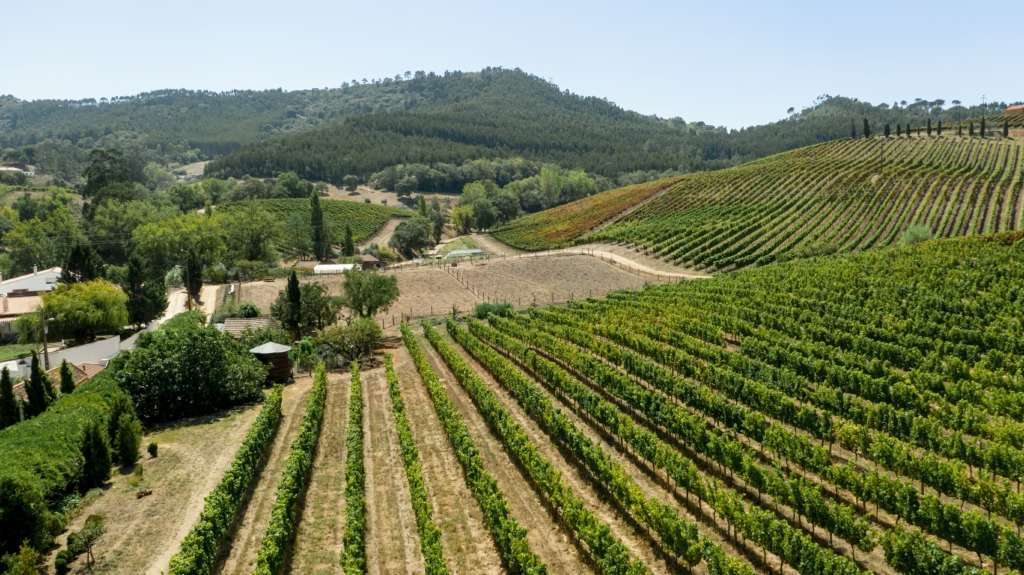
For those who love wine — or simply the curious — staying in Cotignac means having within driving distance dozens of family estates where you can taste, exchange with the winemaker, leave with a few bottles and a story to tell. Wine tourism in the Haut Var doesn't have the media buzz of Saint-Émilion or Burgundy, and that is precisely what gives it its charm.
This guide introduces you to the Côtes de Provence appellation, gives you everything you need to choose your visits well from Cotignac, and shares our practical tips to make the most of Provençal wine tourism.
AOC Côtes de Provence in a few figures
The appellation was officially recognised in 1977. It now covers around twenty thousand hectares of vines, spread across four departments (Var, Bouches-du-Rhône, Alpes-Maritimes, and a small part of Vaucluse). It includes around two hundred and fifty independent estates as well as several large cooperative cellars.
Production is overwhelmingly dedicated to rosé: around eighty-nine percent of total volume. Reds and whites make up the remaining eleven percent, but their quality keeps progressing and some estates even make them their signature.
The iconic grape varieties vary by colour. For rosés and reds, you'll mainly find Grenache, Cinsault, Syrah and Mourvèdre. For whites, Rolle (also called Vermentino) dominates, sometimes accompanied by Ugni Blanc or Sémillon.
Cotignac and its immediate surroundings lie within the generic Côtes de Provence sub-appellation, with no specific geographical designation. This means you'll find here a great diversity of styles, from very traditional estates to more experimental winemakers.
Why Cotignac is an excellent base for wine tourism
The Haut Var is a less-visited area of the coast. When the coastal villages and the hinterland of Nice are overwhelmed in July and August, Cotignac keeps a peaceful rhythm. This tranquillity changes the quality of the wine-tourism experience: winemakers have more time to dedicate to you, cellars aren't overcrowded, and you genuinely talk with those who make the wine.
The geographical position is another asset. Most estates in the immediate vicinity are fifteen to thirty minutes' drive from the village. You can visit two or three cellars in a day without spending your time on the road, and return to dine on the village square.
Our concierge knows the region's winemakers well. We work with several of them for private tastings in our villas, or to prepare gourmet baskets paired with their vintages. This human proximity makes all the difference in the quality of the visits we can organise for you.
Our selection of estates to visit around Cotignac
Rather than imposing a fixed list that would age badly, we prefer to guide you according to your tastes and the season. Here are a few pointers to structure your choice.
For rosé lovers
Several estates near Cotignac produce rosés that regularly rank among the best of the appellation. Styles vary: very pale rosés with delicate peach and citrus aromas, more structured rosés that can accompany a full dinner, traditional-method rosés for special occasions. Our concierge can guide you towards the style you'll enjoy and arrange a comparative tasting.
For red and white lovers
AOC Côtes de Provence is not limited to rosé. A few Haut Var winemakers approach their reds with real ambition (long barrel ageing, thoughtful blends) and produce bottles to keep for five, ten or fifteen years. Mineral whites based on Rolle pair perfectly with Mediterranean cuisine, particularly the goat cheeses from the Cotignac plateau.
For discovering committed winemakers
Several estates in the region work organically or biodynamically. For those interested in the environment and virtuous viticultural practices, we can guide you to these winemakers who are happy to open their doors and explain their approach.
What a vineyard visit in Provence looks like
If you've never visited an estate, here's what to expect. Most cellars welcome visitors by appointment, sometimes without one for the better-known names. A typical visit lasts between one hour and an hour and a half. It often starts with a quick tour of the vines, then a visit of the cellar (tanks, barrels, vinification area), and ends with the tasting.
Tastings generally include between three and eight wines, from white to red via rosé. It's the chance to ask the winemaker any question: terroir, vinification methods, food pairings, vintage choices. Winemakers love to talk about their craft and appreciate curious visitors.
A simple tasting is often free or charged at a symbolic price (five euros). A more in-depth guided visit with a tasting of prestige cuvées can cost between ten and twenty-five euros per person. Wine workshops with lunch can reach fifty to one hundred and fifty euros per person for the most exclusive experiences.
Buying on site is possible and always appreciated by winemakers. Prices at the estate are generally lower than at wine merchants or in supermarkets. It's the opportunity to build up your stock for the stay, or even to take some home.
Which wines to taste and take home
Côtes de Provence rosé is the signature of the appellation. But did you know there are three sub-appellations worth knowing? Côtes de Provence Sainte-Victoire (towards Aix-en-Provence) produces more structured wines on clay-limestone terroirs. Côtes de Provence La Londe (on the coast) gives fruitier rosés, shaped by maritime influence. And the generic Côtes de Provence, where Cotignac sits, offers great diversity.
For reds, prefer estates that age their wines in barrels for twelve to twenty-four months. These cellaring cuvées gain complexity with time and pair beautifully with Provençal cuisine (daube, herbed rabbit, Sisteron lamb). Expect twenty to forty euros per bottle for the finest cuvées.
Mineral whites are perfect for summer aperitifs, seafood and goat cheeses. They generally keep for two to five years depending on style. Far less known than rosés, they truly deserve to be discovered during your stay.
Practical tips for a wine-tourism day
Here are our recommendations to fully enjoy wine tourism without overdoing it. The golden rule: no more than two or three estates a day. Beyond that, your palate tires and you no longer taste properly. Better three quality visits than five rushed tastings.
Plan a substantial lunch break between your visits. Many estates suggest or recommend partner restaurants that showcase local producers. It's the opportunity to discover Provençal gastronomy alongside the wines.
In high season, book all your appointments in advance. Our concierge can handle this logistics for you: estate selection based on your tastes, booking appointments, route planning, and restaurant suggestions for breaks.
Our dedicated chauffeur service
We insist on this point. Responsible tasting is a genuine issue in wine tourism. Rather than appointing a designated driver within your group (who won't enjoy the experience), think of our private chauffeur service with our 9-seater VITO. Everyone enjoys the tastings, with no stress and no risk, and the driver takes care of everything. It's one of the most appreciated services among groups and families staying in our villas.
Eating on site: the tables that match Provençal food and wine
Several restaurants in Cotignac and the neighbouring villages particularly champion local winemakers on their wine lists. Ask your server to suggest a pairing with your dish — they're often very knowledgeable on the subject and love sharing their favourites.
Some cooperative cellars also offer tasting-plus-lunch formulas on site, in a simple but authentic setting. It's a good option to discover terroir wines while having a meal at a reasonable price.
For enthusiasts wanting to go further, a few gastronomic tables in the region have remarkable wine lists, with a genuine selection of independent estates. Our concierge can advise you according to your budget and preferences.
Beyond Cotignac: broadening wine tourism in the Var
If you're staying several days in the region and wine tourism is a passion, you can broaden your exploration beyond the immediate surroundings of Cotignac. A few areas truly deserve an excursion.
The Sainte-Victoire sub-appellation, towards Aix-en-Provence, is around an hour's drive away. The terroir is different (more clay-limestone) and the wines have real character. It's also the chance to discover Aix-en-Provence and its cultural heritage.
The La Londe sub-appellation, on the coast, is further (an hour and fifteen) but the contrast is striking. Seaside vineyards, estates with views over the Hyères islands, a more Mediterranean atmosphere. Combine it with a beach day for a complete programme.
Staying in Cotignac to live the wine experience
Our concierge manages several villas in Cotignac and the neighbouring villages, all suited to a wine-tourism stay. A villa with a pool and large terrace lets you extend the pleasure of tasting: open the bottles brought back from the estates in late afternoon, pair them with a gourmet platter of local products, and enjoy the sunset over the garrigue.
We work with Âme du Sud, our local partner, to create gourmet platters paired with regional wines: charcuterie, goat cheeses from the plateau, Nyons olives, artisanal tapenades, sourdough breads. Everything is delivered directly to your villa, ready to be enjoyed.
For larger groups, some of our villas can host up to sixteen people and allow for private tastings with a winemaker who comes to you. It's an exceptional experience that will mark your stay.
FAQs
Frequently asked questions
Several quality estates are accessible within five to fifteen minutes' drive of Cotignac. Our concierge can guide you according to your tastes (fresh and fruity rosés, cellaring reds, mineral whites) and arrange private tastings with the region's winemakers for you. The precise selection of recommended estates is regularly updated by our team.
For family-run and confidential estates, booking is strongly recommended, especially in high season (June to September). Cooperative cellars and large estates generally welcome visitors without an appointment, but an in-depth guided visit will require a reservation. Our concierge can take care of the bookings for you.
Rates vary depending on the estate and the type of visit. A simple tasting is often free or charged at a symbolic price (five euros). A guided visit with a tasting of several cuvées costs between ten and twenty-five euros per person. In-depth wine workshops or experiences with lunch can reach fifty to one hundred and fifty euros per person.
Most estates are accessible to children, and many offer play areas or educational activities about the terroir. But the experience remains primarily for adults. We recommend short visits (forty-five minutes to one hour) if you're travelling as a family, or alternatively to take advantage of our childcare service at your villa while you taste.
Wine tourism should be enjoyed with moderation and responsibility. Our advice: limit yourself to two estates per day, have a proper lunch between visits, and favour our private chauffeur services or the hire of our 9-seater VITO with dedicated driver. This allows you to fully enjoy the tastings with complete peace of mind.
Organising your wine-tourism day
Our local concierge knows the winemakers of the Haut Var well. We can offer you a tailor-made wine-tourism route, adapted to your tastes, your budget and the season: estate selection, booking of appointments, restaurant suggestions for breaks, transport organisation with our VITO + chauffeur service: we handle everything, you enjoy.
To discuss your wine-tourism stay in Cotignac, contact our team. We respond within twenty-four working hours.